
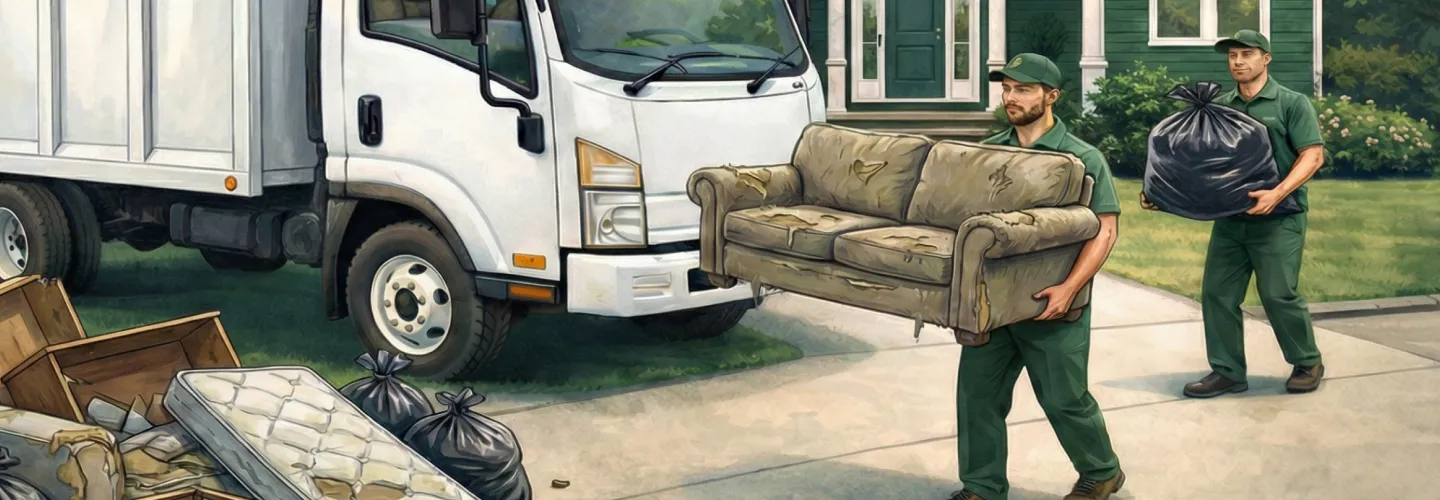
Cumming Construction Debris Removal Services
Choose our construction debris removal for fast, reliable service that keeps your site safe, compliant, and clutter-free—so you can focus on building, not cleaning.
Get a Free QuoteOur Cumming Junk Removal Services
Construction Debris Removal in Cumming, GA – Local Service Guide
Construction debris removal in Cumming, GA is essential for keeping homes and businesses safe, clean, and compliant with local regulations. Whether you’re renovating a home in Windermere, clearing out a basement in Chattahoochee River Club, or managing a commercial build-out near Market Place Boulevard, timely debris removal ensures projects stay on track and neighborhoods remain attractive. For residential items like old appliances or hot tubs, removal often follows upgrades, seasonal cleanouts, or storm damage. Local options include donation, recycling, or proper disposal, with logistics shaped by driveway access, weather, and item size. Garage, attic, and yard waste cleanouts are common after spring storms or during fall leaf cycles, especially in tree-heavy areas like Habersham. Commercial clients—restaurants, offices, and property managers—require discreet, scheduled pickups to minimize disruption and handle larger volumes. Specialty services, such as dumpster rentals or estate cleanouts, demand careful planning and coordination, particularly for foreclosures or hoarding cases. For guidance on local disposal rules and permits, visit the Cumming Planning & Zoning department.
Key Considerations for Construction Debris Removal in Cumming
- Timing projects around local weather and neighborhood schedules
- Securing necessary permits for large-scale debris removal
- Choosing proper disposal or recycling channels for different materials
- Ensuring easy access for removal vehicles in tight or busy areas
- Estimating debris volume to select the right service or container size
- Coordinating with local authorities for specialty or regulated items
Benefits of Construction Debris Removal in Cumming
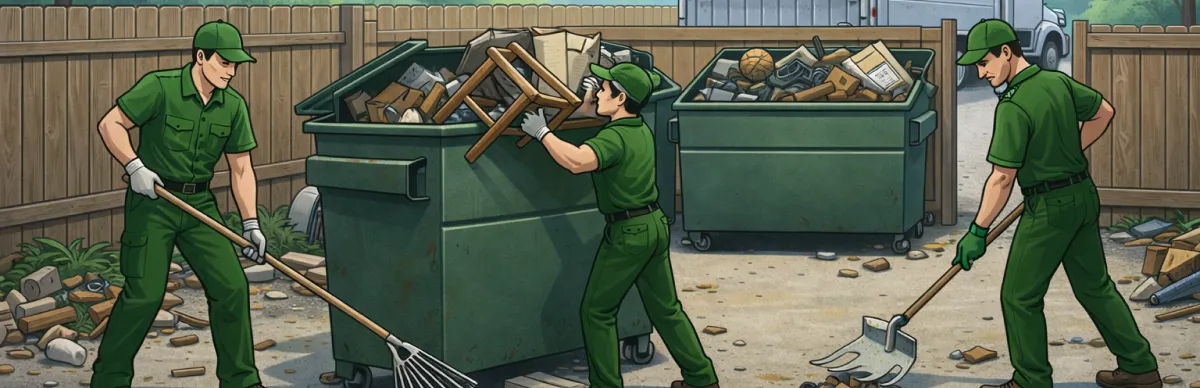
Fast and Reliable Cleanup
Safe Job Site Practices
Eco-Friendly Disposal Solutions
Cost-Effective Debris Removal
Experienced Local Professionals
Flexible Scheduling Options
Coordinating Construction Debris Removal with Cumming's Streets Department and Yard Debris Collection
Construction and demolition (C&D) debris generated from renovation, remodeling, or demolition projects in Cumming requires careful coordination with municipal services. The Cumming Streets Department oversees right-of-way maintenance and yard debris collection, and property owners must ensure that construction waste does not obstruct public roadways, sidewalks, or drainage infrastructure. Key considerations for debris removal coordination include:
- Material segregation at the job site — separate wood, metal, concrete, drywall, and roofing materials before transport
- Right-of-way clearance — debris staging areas must not block public streets, fire hydrants, or utility access points
- Yard debris distinction — landscape waste generated during construction (tree limbs, stumps, sod) may qualify for the city's yard debris collection but must be separated from C&D materials
- Scheduling — coordinate removal hauling to avoid conflicts with municipal street maintenance operations
- Load securing — all debris transported on public roads must be properly covered and secured to prevent roadway hazards
Cumming Streets Department
100 Main Street, Cumming, GA 30040
Phone: (770) 781-2020
Official Website: Cumming Streets Department
Property owners undertaking projects that generate significant debris volumes should contact the Streets Department in advance to confirm any restrictions on staging materials near the right-of-way.
Cumming Building Permit and Code Enforcement Requirements for Demolition Debris
Any construction or demolition project in Cumming that generates debris typically requires building permits and must comply with local code enforcement standards. The Cumming Planning & Zoning Department administers building permits, development review, and code enforcement for projects within city limits. Before beginning debris-generating work, property owners and contractors should verify the following:
- Building permits — demolition, renovation, and structural modification projects require active permits before work begins
- Debris management plans — larger projects may require documentation of how C&D waste will be handled, sorted, and disposed of at approved facilities
- Code enforcement inspections — the city may inspect job sites to verify that debris is not accumulating in violation of property maintenance codes
- Illegal dumping prohibitions — disposing of construction debris on vacant lots, in waterways, or along roadways is a code violation subject to fines
- Project completion timelines — permits may include conditions requiring debris removal within a specified period after project completion
Cumming Planning & Zoning Department
100 Main Street, Cumming, GA 30040
Phone: (770) 781-2020
Official Website: Cumming Planning & Zoning
Contractors operating in Cumming should also confirm that they hold appropriate business licenses and insurance coverage before hauling construction debris from job sites.
Georgia Environmental Protection Division Regulations Governing Construction Waste Disposal
Construction and demolition debris disposal in Cumming is subject to state-level oversight by the Georgia Environmental Protection Division (GA EPD). Georgia's Solid Waste Management Act (O.C.G.A. § 12-8-20 et seq.) establishes the regulatory framework for how C&D materials must be managed, transported, and disposed of throughout the state. Important state-level requirements include:
- Permitted disposal facilities — all C&D debris must be taken to facilities holding valid solid waste handling permits issued by GA EPD
- Inert waste landfills — clean concrete, brick, block, and asphalt may be accepted at inert waste landfills, which have different permitting requirements than municipal solid waste landfills
- Asbestos-containing materials — structures built before 1980 may contain asbestos; Georgia requires a thorough inspection by a licensed inspector before demolition, and all friable asbestos must be removed by certified abatement contractors per the EPA National Emission Standards for Hazardous Air Pollutants (NESHAP)
- Lead-based paint — renovation work in pre-1978 structures must follow EPA Renovation, Repair, and Painting (RRP) Rule lead-safe work practices
- Hazardous waste exclusion — paints, solvents, adhesives, and treated wood containing hazardous chemicals must not be mixed with standard C&D debris
Georgia Environmental Protection Division
2 Martin Luther King Jr. Drive SE, Suite 1456, Atlanta, GA 30334
Phone: (404) 656-4713
Official Website: Georgia Environmental Protection Division
Material Sorting and Recycling Requirements for Cumming Construction Projects
Effective material sorting at the job site is essential for regulatory compliance and environmental stewardship in Cumming. While Georgia does not currently mandate a specific C&D waste diversion rate, the Forsyth County Planning & Community Development Department encourages recycling of recoverable construction materials. Proper sorting reduces disposal costs and diverts reusable resources from landfills. Common C&D materials and their recommended handling include:
- Concrete, brick, and masonry — may be crushed and recycled as aggregate for road base or fill material; accepted at inert waste processing facilities
- Scrap metal — steel framing, copper wiring, aluminum flashing, and iron pipe have resale value and should be separated for scrap metal recyclers
- Clean wood — untreated dimensional lumber and plywood can be recycled or repurposed; pressure-treated wood requires separate disposal due to chemical content
- Drywall and gypsum board — recyclable at specialized facilities; should not be mixed with other debris due to moisture and contamination concerns
- Roofing shingles — asphalt shingles are recyclable into road paving material at approved processing facilities
- Cardboard and packaging — all packaging materials from new construction supplies should be separated for standard recycling
Forsyth County Planning & Community Development
110 E. Main Street, Suite 100, Cumming, GA 30040
Phone: (770) 781-2115
Official Website: Forsyth County Planning & Community Development
Contractors should maintain separate collection areas on-site for recyclable metals, clean wood, masonry, and mixed C&D waste to streamline disposal and maximize material recovery.
Safety and Hazardous Material Handling for Construction Debris in Cumming
Construction debris removal presents significant safety hazards that require adherence to federal and state occupational safety standards. Workers handling C&D materials in Cumming must follow OSHA construction industry standards (29 CFR 1926) for personal protective equipment, fall protection, and heavy lifting protocols. Critical safety and hazardous material considerations include:
- Asbestos surveys — required before demolition or renovation of structures built before 1980; Georgia-licensed inspectors must conduct surveys, and positive findings require certified abatement before debris removal
- Lead paint assessment — homes and buildings constructed before 1978 may contain lead-based paint; EPA RRP Rule certification is required for contractors disturbing painted surfaces
- Silica dust exposure — cutting, grinding, or demolishing concrete and masonry generates respirable crystalline silica; OSHA Table 1 controls or exposure monitoring required
- Nail and puncture hazards — salvaged lumber and demolition debris frequently contain protruding nails and fasteners; puncture-resistant footwear and gloves are mandatory
- Structural collapse risks — partial demolition sites require engineering assessment to ensure remaining structures are stable before debris removal begins
The Forsyth County Environmental Health Department provides guidance on environmental health concerns related to construction activities, including water quality protection and proper handling of materials that may affect public health.
Forsyth County Environmental Health
1110 E. Main Street, Cumming, GA 30040
Phone: (770) 781-6932
Official Website: Forsyth County Environmental Health
What Neighborhoods Do We Serve Throughout Cumming, GA?
- Downtown Cumming Historic District: Older commercial and residential structures in the city center frequently require renovation debris removal. Narrow lot lines and proximity to the town square may limit staging areas for debris, and historic preservation considerations may apply to certain properties.
- Castleberry Hills / Pilgrim Mill Area: Established residential neighborhoods with homes dating to the 1980s and 1990s undergoing kitchen and bathroom remodels. Standard residential street access accommodates debris removal vehicles, though cul-de-sac turnaround space should be confirmed in advance.
- Vickery Village and Surrounding Developments: Newer mixed-use and residential construction generates debris from warranty repairs, additions, and landscape modifications. HOA regulations may govern debris staging locations and removal scheduling requirements.
- Coal Mountain Area: Semi-rural properties with longer driveways and larger lots often involve barn, outbuilding, or deck demolition projects. Gravel or unpaved driveways require assessment for heavy vehicle access.
- Sharon Springs and Kelly Mill: Rapidly developing subdivisions with active new construction and renovation activity. Coordination with ongoing neighborhood construction traffic and compliance with community development standards managed through Forsyth County Engineering is advisable.
- Bethelview Road Corridor: A mix of commercial and residential properties along this major corridor generates diverse C&D waste streams. Commercial renovation projects may require additional permitting through Cumming Planning & Zoning and coordination with traffic management during debris hauling.