

Cumming Hoarding Cleanup Services
Choose our hoarding cleanup services for a respectful, judgment-free approach that restores safety, comfort, and peace of mind to your home—handled by experienced professionals who truly care.
Get a Free QuoteOur Cumming Junk Removal Services
Hoarding Cleanup in Cumming, GA – Local Service Guide
Hoarding cleanup in Cumming, GA requires a sensitive, thorough approach tailored to local needs. Whether you’re in Windermere, Chattahoochee River Club, or near downtown, residents often seek help after major life events, seasonal cleanouts, or property transitions. For residential items like furniture, mattresses, and appliances, triggers include spring cleaning, estate transitions, or replacing old items. Local options include donation, recycling, or city-approved disposal, with logistics shaped by driveway access, weather, and item size. Spaces such as garages, basements, and yards see increased activity after storms or during yard waste cycles, especially in flood-prone or tree-heavy neighborhoods. Commercial clients in areas like Market Place Boulevard or near Lanier Crossing face unique needs—restaurants and offices require discreet, timely service, often after renovations or tenant changes. Specialty cleanups, including hoarding, foreclosures, or construction debris, demand careful planning, coordination with property managers, and compliance with local rules. For guidance on permits and disposal, consult Cumming Planning & Zoning.
Key Considerations for Hoarding Cleanup in Cumming
- Timing cleanouts around local weather and seasonal events
- Securing necessary permits for large-scale removals
- Using approved disposal and recycling channels
- Ensuring property access for trucks and crews
- Managing high volumes and category-specific items
- Coordinating with local authorities and property managers
Benefits of Hoarding Cleanup in Cumming
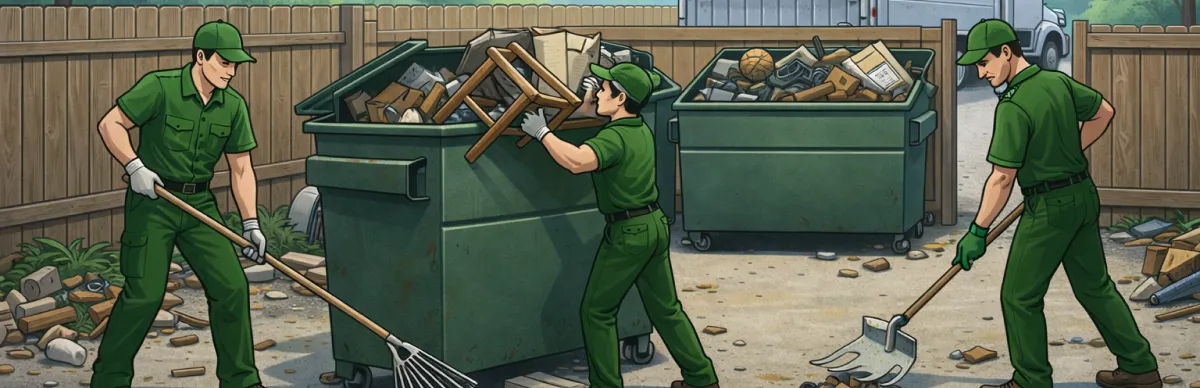
Professional and Compassionate Team
Discreet and Confidential Service
Thorough Property Restoration
Safe Removal of Hazardous Materials
Fast and Efficient Cleanup Process
Customized Cleanup Plans
Coordinating Hoarding Cleanup with Forsyth County Environmental Health and Code Enforcement
Hoarding situations in Cumming often involve overlapping jurisdictional authority between city code enforcement and county health services. Properties identified as hoarding cases may be flagged through Cumming Planning & Zoning for code violations including obstructed egress, pest infestations, and structural hazards. Forsyth County Environmental Health conducts inspections when biological or environmental contamination is suspected, including mold growth, animal waste accumulation, and standing water conditions.
- Code violation notices may require remediation within a specified timeframe established by the city
- Environmental health inspections assess contamination levels and determine whether biohazard remediation is necessary
- Fire safety concerns are evaluated by the Forsyth County Fire Department when blocked exits or combustible material accumulation is reported
- Structural assessments may be required if excessive weight from hoarded materials has compromised floors, walls, or foundations
- Occupancy permits may be suspended until the property meets minimum habitability standards
Forsyth County Environmental Health
1110 East Main Street, Cumming, GA 30040
Phone: (770) 781-6932
Official Website: Forsyth County Environmental Health
Biohazard Disposal and Hazardous Material Handling During Cumming Hoarding Remediation
Hoarding properties in Cumming frequently contain hazardous materials requiring specialized handling and disposal procedures. The Georgia Environmental Protection Division regulates the management of hazardous waste under the Georgia Hazardous Waste Management Act (O.C.G.A. § 12-8-60 et seq.), which governs proper identification, transportation, and disposal of contaminated materials. Common biohazards encountered during hoarding cleanup include animal waste, decomposing food, medical sharps, and bodily fluids.
- Biohazardous waste must be packaged in approved red biohazard bags and transported by licensed medical waste haulers to permitted treatment facilities
- Sharps containers are required for needles, syringes, and broken glass contaminated with biological material
- Household hazardous waste such as old paint, solvents, pesticides, and cleaning chemicals cannot be disposed of in regular solid waste streams
- Asbestos-containing materials in pre-1980 homes require assessment by a Georgia-licensed asbestos inspector before disturbance, per EPA regulations
- Lead paint in pre-1978 structures requires compliance with the EPA Renovation, Repair, and Painting Rule, mandating certified renovators use lead-safe work practices
Workers handling biohazardous materials must use appropriate personal protective equipment including respirators, gloves, and protective suits in accordance with OSHA Bloodborne Pathogens Standard (29 CFR 1910.1030).
Georgia Environmental Protection Division
2 Martin Luther King Jr. Drive SE, Suite 1456, Atlanta, GA 30334
Phone: (404) 656-4713
Official Website: Georgia Environmental Protection Division
Cumming's Bulk Waste Disposal and Material Sorting Requirements for Hoarding Projects
Large-scale hoarding cleanups in Cumming generate significant volumes of mixed waste that must be properly sorted and disposed of according to municipal and state regulations. The Cumming Streets Department oversees yard debris collection and right-of-way maintenance, though hoarding-related bulk waste typically exceeds standard residential collection parameters and requires coordination with licensed commercial haulers.
- Recyclable materials including metals, cardboard, paper, and plastics must be separated from general waste before disposal at permitted facilities
- Electronics and e-waste such as televisions, computers, and monitors should not be placed in general waste; Georgia encourages responsible e-waste recycling through designated collection programs
- Appliances containing refrigerants (refrigerators, air conditioners, freezers) require certified refrigerant recovery per EPA Section 608 before disposal
- Tires are prohibited from Georgia landfills and must be taken to licensed tire recycling facilities
- Furniture and mattresses in salvageable condition may be directed to local donation organizations; unsalvageable items require transport to a permitted solid waste facility
Material sorting at the cleanup site reduces landfill burden and ensures compliance with Georgia's solid waste management goals established under O.C.G.A. § 12-8-20 et seq.
Cumming Streets Department
100 Main Street, Cumming, GA 30040
Phone: (770) 781-2020
Official Website: Cumming Streets Department
Permit and Property Access Considerations for Hoarding Cleanup in Cumming
Hoarding cleanup projects in Cumming may require permits and advance coordination with municipal departments, particularly when work involves structural modifications, debris staging in public rights-of-way, or renovation following material removal. Cumming Planning & Zoning administers building permits, code enforcement, and development review for properties within city limits.
- Building permits may be required if hoarding remediation involves removing built-in shelving, repairing damaged walls or flooring, or addressing structural damage caused by excessive material weight
- Right-of-way coordination with the city is necessary when cleanup vehicles or staging areas extend onto public streets or sidewalks
- Noise ordinance compliance requires that cleanup activities using power equipment adhere to Cumming's established operating hours for residential areas
- Property access planning should account for narrow hallways, compromised staircases, and blocked doorways common in hoarding situations
- Post-cleanup inspections through Forsyth County Planning & Community Development may be required to verify code compliance before occupancy is restored
Cleanup contractors should verify insurance and licensing requirements with the city before commencing work on hoarding properties.
Cumming Planning & Zoning
100 Main Street, Cumming, GA 30040
Phone: (770) 781-2020
Official Website: Cumming Planning & Zoning
Mental Health Resources and Social Services Coordination for Cumming Hoarding Cases
Effective hoarding cleanup in Cumming extends beyond physical material removal and requires coordination with mental health and social service providers. Hoarding disorder is recognized as a clinical condition in the Diagnostic and Statistical Manual of Mental Disorders (DSM-5), and cleanup efforts conducted without appropriate behavioral health support frequently result in re-accumulation. Forsyth County offers resources that complement the physical remediation process.
- Forsyth County behavioral health services can provide referrals for individuals diagnosed with hoarding disorder to licensed therapists specializing in cognitive behavioral therapy
- Adult Protective Services may be involved when hoarding conditions endanger elderly or vulnerable adults living in the property
- Animal control coordination is necessary when hoarding situations involve animal accumulation, requiring humane removal and veterinary assessment
- Code enforcement timelines should be communicated to mental health providers so that therapeutic support aligns with remediation deadlines
- Follow-up planning after cleanup should include ongoing support services to help residents maintain safe living conditions and prevent recurrence
Cleanup teams working in Cumming should approach hoarding situations with sensitivity, recognizing the psychological complexity involved and coordinating with appropriate professionals throughout the process.
What Neighborhoods Do We Serve Throughout Cumming, GA?
- Downtown Cumming: Older residential and commercial structures near the historic town square may present access challenges including narrow lots, limited staging areas, and proximity to neighboring buildings. Pre-1980 homes in this area warrant assessment for lead paint and asbestos before cleanup begins.
- Castleberry Hills: Single-family residential properties with standard driveway access. Hoarding cleanup in this area typically involves navigating homeowner association guidelines regarding debris staging and removal vehicle parking duration.
- Pilgrim Mill Area: Properties near Lake Lanier with varied lot sizes and terrain. Steep driveways and wooded surroundings may limit truck access and require additional equipment for material transport from the residence to staging areas.
- Sharon Springs: Newer subdivision development with wider streets and accessible driveways. HOA regulations may restrict visible debris staging and impose time limitations on cleanup vehicle presence in the neighborhood.
- Midway Community: Rural-residential properties with longer driveways and larger lots. Septic system locations must be identified before heavy vehicle access, and well water sources should be protected from contamination during hazardous material handling.
- Bethelview Road Corridor: Mix of established residential neighborhoods and newer developments along a primary transportation route. Properties along this corridor generally offer adequate truck access, though traffic management may be necessary during peak hours.